





Cologne 75 (Köln 75)
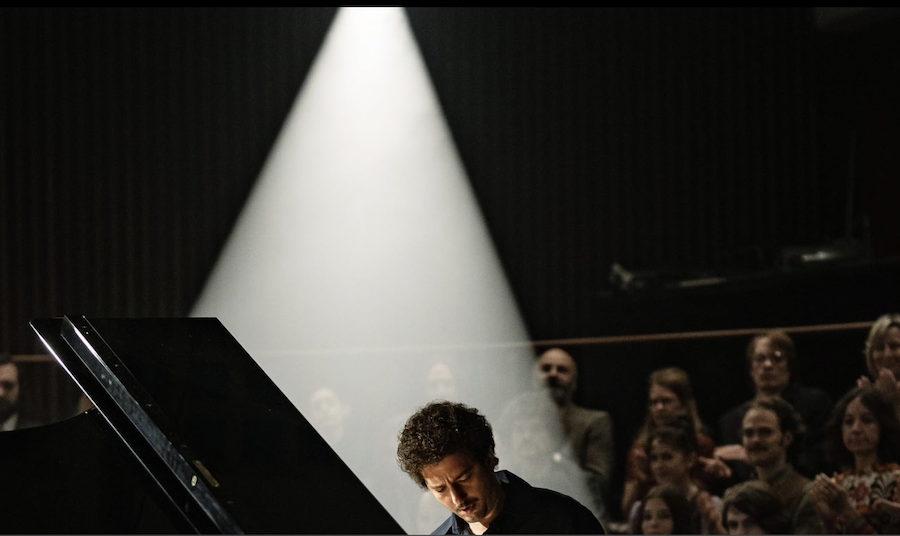
This film – just shown at the Sheffield Documentary Festival – has been called many things by both professional critics and early viewers: an offbeat biopic, a musical pageant, a jazz geek lecture, a punchy portrait of an indomitable young woman and a picture of a singular artist who most would agree, dramatically pushed the artistic boundaries into new areas of creativity. It presents as a drama the true story of the extraordinary Vera Brandes, a not untypical rebellious teenager – played by Mala Emde – who discovers the unbridled joy of music; in this case, jazz, partly thanks to a chance encounter with British jazz doyen, Ronnie Scott. She then turns herself through sometimes brute but never unfocused force of will into a concert promoter, an impresario who manages to book celebrated American pianist Keith Jarrett for a late night concert in the Cologne Opera House. In spite of her war veteran father’s vehement, sometimes abusive, disapproval, she arranges the gig but has to surmount a daunting number of obstacles to make the unlikely concert a success.
In many ways, this story has a 30’s “show must go on” musical extravaganza feel about it, only set in a repressive seventies West Germany when Red Brigade terrorism was haunting the streets. The narrative mostly manages to avoid the cliché temptations of these kinds of stories but marks itself out from the biopic of a showrunner in two closely connected but very distinctive ways. The figure of journalist Michael Watts played by Michael Chernus takes the approach into a very different dimension. He occupies much of the middle act of the film when he is following the improvisational genius of Keith Jarrett on tour around Europe, becoming the focus of the story, which is inevitably distracting even as it certainly ramps up the tension about the fast approaching concert date. More importantly though, from a stylistic and storytelling point of view, the director Ido Fluk, feels it important to provide some cultural context to the concert. Watts breaks the fourth wall and addresses the audience directly about the place of Jarrett in the jazz canon and musical history. In some ways a clumsy device, this nevertheless helps the non-jazz aficionado viewer appreciate the importance of the artist. It also gives the film an opportunity to indulge them with some wonderful well chosen archive clips of the likes of Duke Ellington and Miles Davis. This is in very obvious contrast with the main story of Brandes relationship with Jarrett where, because he is played brilliantly by John Magaro, Fluk clearly did not want to distract us in comparing the real from the dramatised footage of Jarrett at the piano.
All this makes for a curious and admittedly only partly successful layering of perceived realities in the film story. It is quite understandable that the filmmaker feels the need to frame the improvisational genius of Keith Jarrett within the place of jazz in the world, an inspiration in all kinds of musical fields and genres but with a label which could be off-putting. One key scene has Brandes desperately trying to get a radio station DJ to promote the forthcoming gig; he dismisses it as jazz in a way that shows he regards it as a defunct musical form with little appeal to their audience. The notable achievement of this film is that not only does it comprehensively banish those prejudices but it shows the power of determination and relentless focus in achieving an artistic goal. In this respect, it is genuinely inspirational.
Not a massive archive driven production then, but the film nevertheless adroitly contrasts the actuality footage of great performers with the very subtly recreated performance of a musical giant. It is the opposite of using dramatic reconstruction to cover episodes in a documentary treatment of a figure which were not filmed. Here the archive underlines the quality of the recreation – and at the same time, pays immense tribute to an unsung hero in the staging of that landmark concert, one which because it was recorded by a fledgling ECM label, stills holds the sales records for both solo piano and jazz recordings. The film enhances our understanding of this pivotal event, throwing new light on a classic. It’s a remarkable story very well brought to life, hitting notes which echo far beyond the walls of a smoky jazz club.