




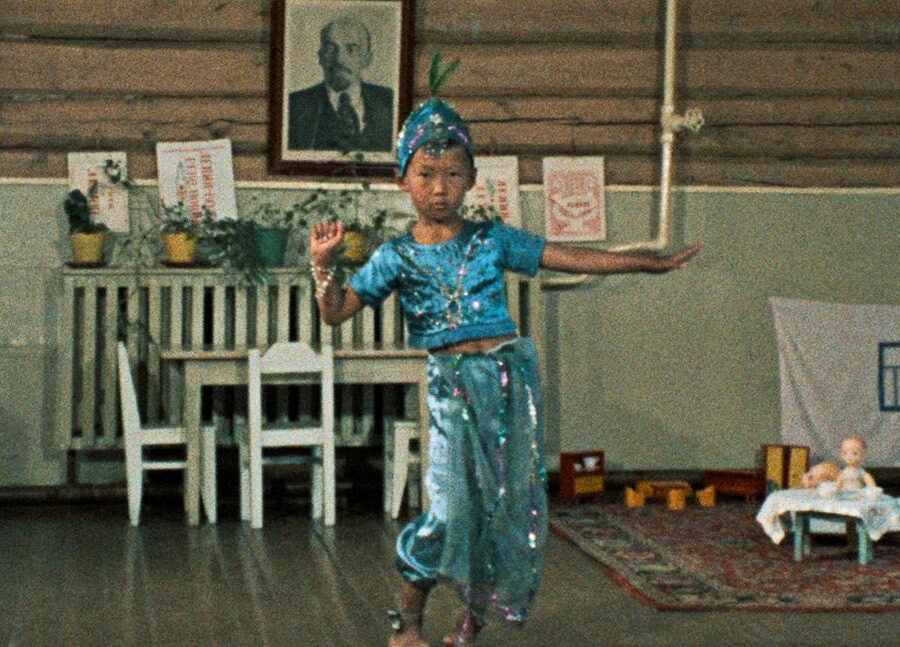
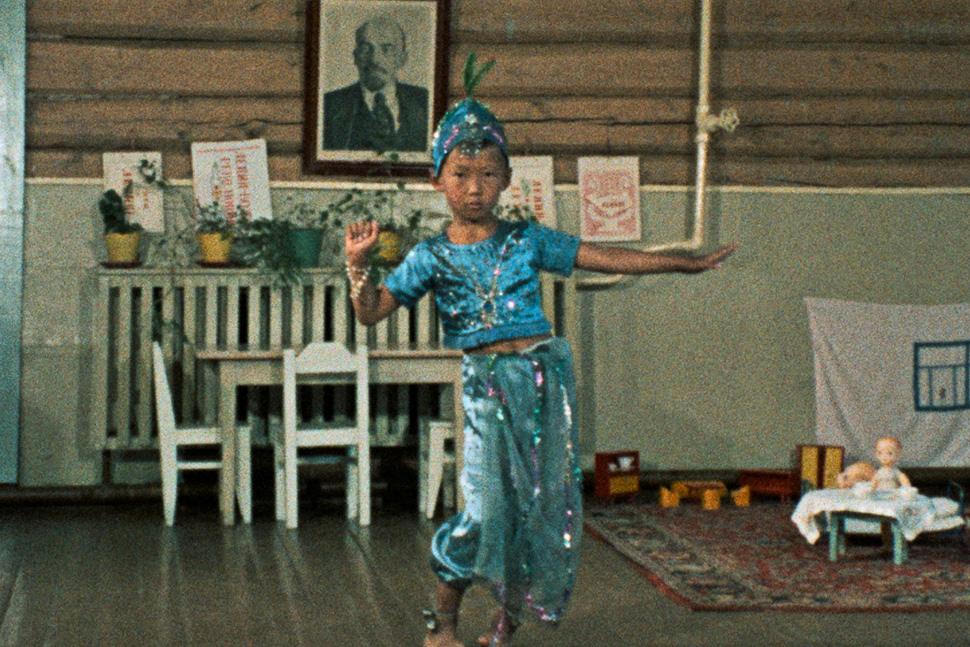
PAN reviewer Steve Bergson has been to the London Film Festival at the BFI to digest ‘Imperium’ film the BFI describes as ‘Master of archival film reconstruction, Sergei Loznitsa, reframes Soviet history once again via the revealing gaze of Italian cameramen who captured life there in the early 1970s.’
Here is his report:
Imperium
London Film Festival showing
the way we were
This almost three-hour film arrived in London fresh from a notable showing at the Venice Film Festival in September. The unusual project is a recent assembly of rushes originally shot in the days of the Soviet Russian empire; it opens a door to everyday life before the sky fell in on the USSR only twenty years later. The material was filmed possibly as B-roll for a documentary never completed; the quality of the picture and audio is nevertheless remarkable. It has now been carefully restored and edited to reflect the empire’s different regions, customs and ways of life, all presented without commentary. In places it has the feel of that great documentary series, How Yukong Moved the Mountains, made by Dutch filmmaker, Joris Ivens a few year later but in China. The two communist leviathans were of course closed to western eyes but they both exhibited the same pursuit of a socialist ideal, tempered by the somewhat less than utopian reality of totalitarian control. The fascination is with this abstract border between the cultural diversity of a vast land and the paradoxical imposition of standardisation by diktat.
Ukrainian director Sergei Loznitsa has produced such notable archive-based films as State Funeral and The Invasion, but here the canvas is bigger, ranging from October parades in Moscow’s Red Square to distant rural weddings, with various social rituals like fashion shows, animal sacrifices, harvesting cotton or even milking cows. It’s interesting that however widespread the geographical coverage – and it goes from the Arctic to the Central Asian deserts, the Carpathians across to the Pacific, Tashkent to the Baltic states, Latvia and Estonia – the same dated looking light blue cars crop up in multiple scenes. Perhaps they inadvertently cue us to the homogeneity of certain aspects of life across the vast empire.
There have been some fascinating links between Soviet Russia and Italy in film history. Celebrated director Andrei Tarkowski went to make films in Rome before leaving the USSR altogether in the 80’s. This project came about by chance, when Loznitsa learned about what he describes as a treasure preserved in the AAMOD archive in Rome. There was also an intriguing backstory to this trove. Between 1970 and 1973, a group of Italian filmmakers had embarked on the journey across more than twenty regions of the Soviet Union “to document its extraordinary cultural, social, and religious diversity” says Loznitsa. “In terms of scale, it was the largest project ever carried out in the USSR by foreign filmmakers”. It could offer a perspective on people who “for a time, lived together within one strange state formation, which quite naturally ceased to exist in 1991”. Crying out for astute editing and modern post production, the film could have been virtually there in the can, he sensed: “I could not miss such an opportunity.”. It turned out of course to be something of a herculean task revivifying a defunct project. In trying to realise anything like a narrative arc in the disparate rushes, Loznitsa could tease out no dominant theme, yet with the hard won result he still manages to take us on a subtle and rewarding journey.
If today’s audience asks what is the point of this compilation beyond an historical artefact, the answer is inevitably nuanced. There is undoubtedly a documentary value to lightly mediated footage of life from that era, but the audience is always kept aware of something crucial: while this was originally no travelogue project, it was still very much a product of its time. The itinerary had to be approved by the authorities before any camera rolled; naturally it needed to avoid the darker side of the regime – the secret police, the gulags, any evidence of the repression of opposition or even examples of free thinking. And yet, the larger geopolitical picture of the era does seep through. Loznitsa’s film provides no obvious guides to the nature of the reality being depicted, aside from headings to locate us and the punctuation of different events with red screens accompanied by an ominous bell ringing. So do we detect any desperation for change or even just a sense of yearning in the faces of the people who feature in the film? It’s hard to say. Everyone is very aware of the camera, still something of a novelty in many of these places in the early 70’s. And much does admittedly look like that period anywhere in the world. There is the ever present dreary workaday grind but also a vibrant tapestry of the special occasions. Even then however, there are telling moments which stay in your mind. At one village gathering, the camera picks up a uniformed “commissar” at the communal dinner table; as we focus momentarily on him eating, he fixes us with a look, a stare that definitely conveys an implicit threat…you have to wonder where he is now. And how did he digest glasnost and what followed?
Ultimately the film is so much more than history. The old regime might have gone but the underlying folk culture has survived even while the vital issues remain bubbling just under the surface: freedom tussling with tradition, local colour surviving in the face of state ideology, neighbourhood vibes versus remote authority – essentially the quality of life on the planet. It’s a film made from the materials of the Soviet past now presented by a Ukrainian – just as the empire strikes back. Something to reflect on….
Essential Filmproduktion, Kino Produzioni, Société Parisienne de Production, Studio Uljana Kim – footage courtesy of AAMOD
UPDATED: The film is a winner!:
‘The Official Competition jury said: “We, as a jury, have chosen Sergei Loznitsa’s “Imperium” as the BFI London Film Festival’s Best Film for 2026. Imperium is an extraordinary film that explores the Soviet Union in the early 1970’s from a rich archive with a wide-ranging perspective that looks at life in a country with an extraordinary social and cultural landscape that has rarely been seen. The film is richly evocative and emotionally engaging on all levels giving us a visually arresting perspective of life before the Soviet Union was broken apart. Our jury is immensely proud to honour such a powerful and singular piece of work.’