





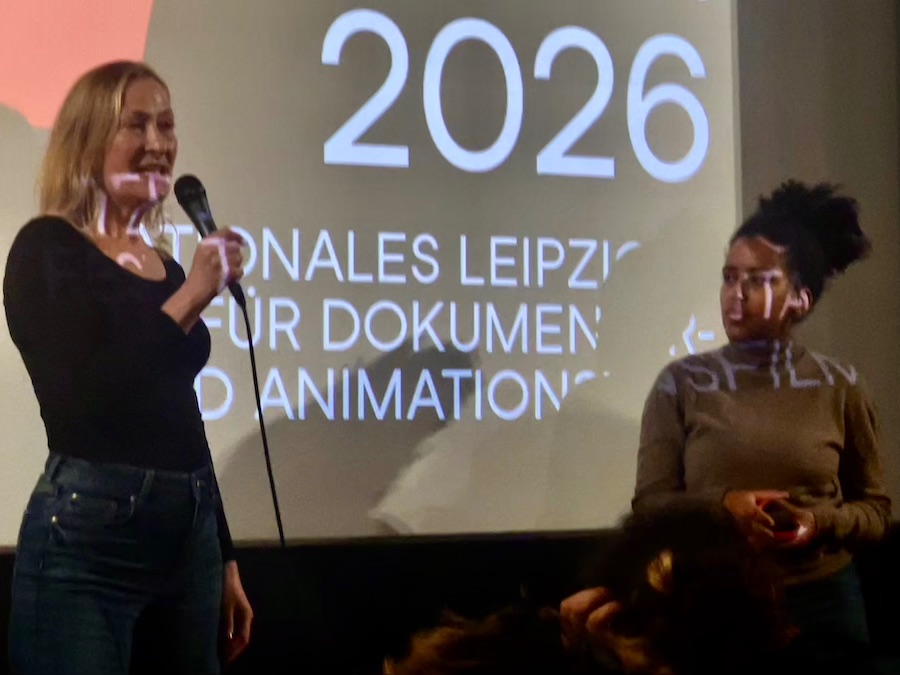
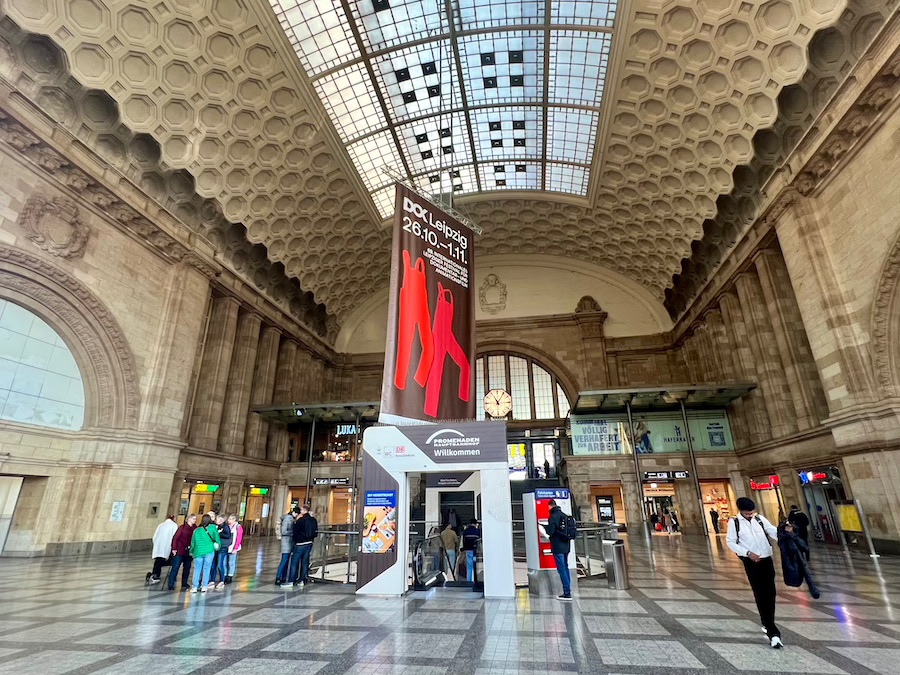
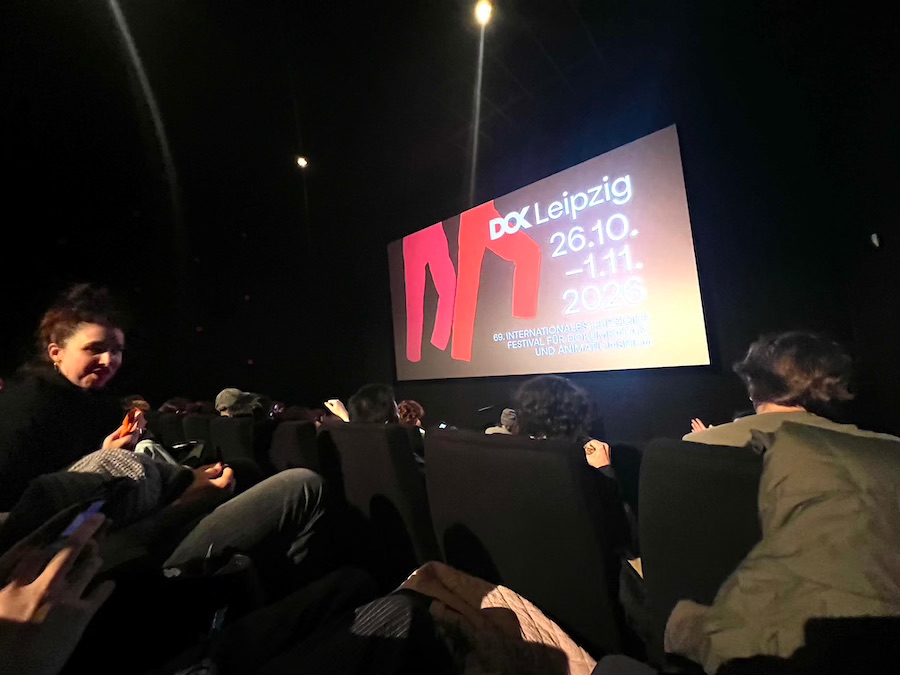
PAN reporter, UK based documentary film researcher, Steve Bergson returns to the DOK 2026 an international festival for documentary and animated film held in Leipzig, Germany 26 Oct – 1 Nov.
Steve was on the look out for archival footage usage in documentaries, here’s what he found:
Doco in the DOK
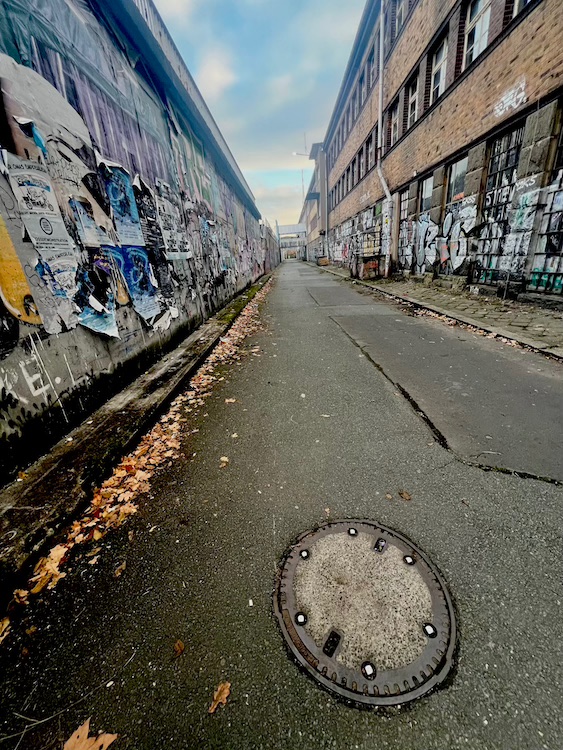
The location for this festival in Leipzig is interesting, on the eastern side of Germany not very far from Ukraine and in a region known for the rise of the AFD party as part of the resurgence of rightwing movements across Europe. This post industrial city is populated by grand old buildings overlooking lime tree lined boulevards that are nevertheless cheek by jowl with derelict factory sites and striking renewal developments. Every surface is graffitti’d to within a centimetre of its visual life; it’s definitely a place of grungy Blade Runner-ish charm.
It seems fitting then that this city should be a cauldron of old ideas and renewed arguments about the role of documentary film. Old clashes seem especially resonant now at a time of huge challenges…to what amounts to the true reality of just about anything. The DOK festival does not shy away from the pressing issues of Gen-AI and authenticity. Many of the screenings have very lively Q & As with the directors of the films being shown and the workshops and panel discussions embrace the gamut of hot topics. While the challenge from the use of unlabelled and unacknowledged Gen-AI looms larger, the need for filmmakers to find ways of being more transparent about their working practices becomes even more pressing. In many ways, this has just trained a brighter light onto traditional issues with the documentary format. Crucial questions of trust in the filmmaker and the veracity of what is presented to the audience are magnified by tech developments. Archive is just one element in this, though an important one because not all stories which should be told are easily filmable, whether current day or in the past. Directors have hard choices to make.
Interestingly, as celebrated a practitioner as Alex Gibney, in his latest film Musk, uses avatars of his non-co-operating subject to flag the composite nature of the film which uses available interviews to fill in the background of the controversial figure. The artifice also of course has the added advantage of unifying all the archive, making it look as if it is all filmed for this production.
Musk was not showing at DOK 26, the 69th festival which has a new director, Ola Staszel. Polish born, she states her aims as challenging stereotypes about eastern Germany, tackling the political sensitivities surrounding films about Palestine, and critically examining the growing pressures on documentary filmmaking.
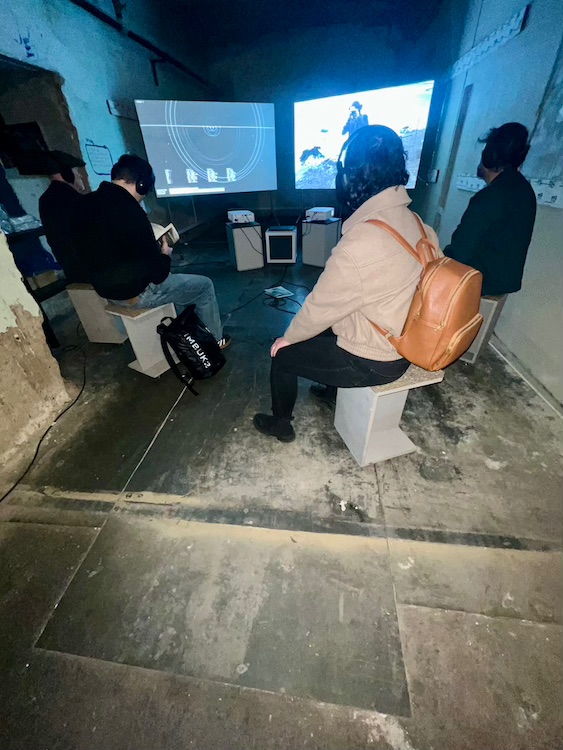
The programme showed this direction of travel. If you take a film like Heat, directed by Jacqueline Zünd and shown in competition, the audience is presented with a vividly shot portrait of the lives of migrant workers in Dubai; gaining access was obviously an issue. Here, stand-ins were used to cover this gap, with an explanation offered in text at the end of the film about the outcome of the key story, but we had to take it on trust – retrospectively – that what we saw was a fair reflection of the life of the person in the story. When it comes to Immersive work, there is even more to ask about the integrity of the footage. The Neuland Landslide immersive programme, set up in a bleak former factory, highlighted this dystopian sense of a fictional creation striving to get to a narrative truth. Aside from the issue of whether you need or want to be enveloped in the blasted wreckage of Gaza or floods in Australia, how valid is it really?
There was some excellent use of archive in films such as the Dutch short How to Catch a Butterfly directed by by Kiriko Mechanicus, which examined the role consigned by traditional culture to Asian women – in the world as well as Japan. This was a filmic essay beautifully constructed to illustrate the way women are pushing back against a long-held stereotype but it was very honest about the case it was making. There was no attempt to lull the audience into following a story with a line. It made it a very effective polemic.
One film about a late painter, Käthe Ebner, Strahlen (Radiation) made up almost entirely from clips from her own home video archive, was very moving and deserved widespread showing. This is a documentary directed by the artist’s sister, Juliane Ebner, so it movingly deals with the topics of farewell and death.
As an overseas visitor to the festival, inevitably one wonders about the outlets beyond the fest that exist to create exposure to many of these films. The answer has to be on specialist channels like ARTE (available on the Apple platform) to avoid that eternal dustbin of random content, YouTube but funding models are changing everywhere. Several films here were very powerful, certainly deserving a widespread showing. There were also intriguing and timely panel sessions at DOK about finding ways to make films more available to a larger audience as well as deploying AI to make content more discoverable by meaning, beyond the limitations of metadata and the phrasing of a prompt.
This all points to a more worrying future for documentaries however. The very idea of an authored work, under challenge from unlabelled Gen-AI, gets harder to compute. It makes the need for filmmakers to find ways of being more transparent about their working practices ever more pressing. Of course the narrative drive will always come first. The story has to lead, because audiences rightly look for an arc to which they can relate – and films shown here which failed to achieve this, fell at the first reel. The demand for forensic examination of both the evidence of the found materials and the methods of presenting them can often run in the opposite direction, away from immersion in the narrative and the world “created” in the film itself. Rather than obscuring this dilemma, it seems now more urgent to acknowledge this conflict and find new ways of dealing with it.
A title like A Fire Here (director, Marlene Edoyan) looked at the lives of three friends on the scenic but harsh mountainous Armenian-Georgian border. They debate their lives and go their own ways. The film is something of a hybrid, placing its appeal between the documentary and fiction spaces. Edoyan works closely with the families and very visually traces both the field labour and domestic work in the community. Yet in many scenes, the dialogue appears scripted to foster the overall sense afforded the audience of a poetic picture of hard lives, a world both present and distant, suspended in time, but inevitably facing an uncertain future. The filmmaker takes for granted the audience will be able to disentangle the dramatic from the documentary – or perhaps might not even question the veracity of the conversations the young men have about the their futures in a splintering Russian federation satellite territory.
Set against this inclusive if not always totally honest approach to the viewer, films like After Lives (Kevin B Lee) take a different line.Through self-consciously desktop computer visuals and forensic detail, this film explores how images of Medusa of Hatra, ISIS propaganda, and digital archives influence reality and memory while examining methods of terrorism and violence. It’s a complex argument.
How then should we collectively deal with very concrete images of terror in an age of AI fakery? This documentary essay takes as its focus, one very “produced” propaganda video of the so-called Islamic State (IS), to tease out what you could term the true rhythm of terror. Ultimately, it seeks to apply some of the intellectual notions in the pivotal 1936 work, The Work of Art in the Age of Mechanical Reproduction by Walter Benjamin to the technological revolution represented by generative AI. Ambitious for a documentary!
The digital realm makes everything reproducible and of course a route via clever political appropriation to oppression. Tools like Claude Opus, GPT-6 Astra, Stable Diffusion or Google’s Nano Banana can now accelerate the detachment of terror propaganda from the original raw motives. It becomes something quite different in the hands of tech manipulation.
These dangers almost inevitably bubbled up in more than one presentation at Leipzig. One session demonstrated software being rolled out to interrogate the meaning in footage largely in formal archives but also with any volume of field material. Naturally AI driven, it has errors but it was suggested they would be ironed out with human oversight. The bias in finding this “meaning” is probably much the same as humans would demonstrate – so the key question is: where will the deficiencies occur and the shortcuts crop up? In the oversight, of course, but as systems settle into workaday operation and costs continue to be driven down, this has to be the prime candidate for achieving savings – without apparent penalty.
This expediency is where AI is likely to assert its control over how we access material. We might even become nostalgic for the days of inputting metadata! At least then, an outlook with all its biases and assumptions could be challenged by other human sensibilities. AI is not likely to encourage this possibility because it would involve assessing the context of every decision it makes at any point in time about what a piece of content actually represents. The politics of indexing were of course always this tricky even if we did not always realise it, but at least they are now largely visible. That catalogue card composed and typed from a 60’s viewpoint might be sexist, racist, stereotyping or whatever, but we can spot that – and make allowances. This is what may well be ironed out of the system in the future.
The films at DOK were shown against this troubled and at times hopeful backdrop; they certainly contributed to the argument in a very creative way. After all, the difficulty of making a film with audience appeal, simultaneously with a rigorous approach to the evidence carrying the story it is telling, embodies an issue as old as the documentary form itself. Too often even now, the director is essentially making a pitch to the viewer to trust their storytelling and ethical chops, but without supplying the cred to justify this. Such a “zugzwang” applies to current filming every bit as much to archive-based productions. After Lives was very honest about the difficulties it presents to every filmmaker but this can be at the expense of the very thing which motivates people to want to watch a documentary in the first place. Despite the large audiences at Leipzig – the best ever – it could still be an endangered species.
Steve Bergson – 11 November 2026.
• View Steve’s DOK 2025 report on PAN